In my last blog, I covered Jantar Mantar exclusively. Among all the attractions in the well-preserved heritage of Jaipur, it stands out, making Indians proud of their urge to explore the universe both scientifically and spiritually. I have a deep connection with this city because my grandparents and uncles adopted it as their home after the partition of India. During the fifties and sixties, as a 5-10-year-old, I visited Jaipur several times, often riding on the bar of a bicycle with my uncle. My recent visit to Jaipur was to share this childhood joy with my grandson, who lives in the USA. In this blog, I will first share some of the unique features of Jaipur followed by experience of our recent visit,
Jaipur: A City of Historical Significance
Founded in 1727 by Maharaja Sawai Jai Singh II, Jaipur was established after the Kushwaha dynasty rulers, who trace their lineage to Kush, the second son of Lord Rama, moved their capital from Amber. Having ruled from Amber for thirty generations, they sought to create a strategically planned new city. Jaipur blends historical richness with cultural vibrancy, its architecture, traditions, and festivals reflecting the grandeur of Rajputana heritage.
The city’s buildings were painted pink in 1876 to welcome the Prince of Wales (later King Edward VII). Maharaja Sawai Ram Singh II, who ruled Jaipur at the time, chose pink to symbolize hospitality. This tradition has been maintained, with laws enacted to preserve the pink color of the old city’s buildings, earning Jaipur its nickname, “The Pink City.”
The Walled City and Its Seven Gateways
Jaipur’s walled city, housing most of its royal heritage, is accessible through seven gates:
- Ajmeri Gate: Leading to Ajmer, a testament to historical trade routes.
- New Gate: A blend of modern and traditional architectural styles.
- Sanganeri Gate: Named after Sanganer, famous for handcrafted textiles.
- Chandpole Gate: Facing west, marking the entrance to bustling markets.
- Surajpole Gate: Facing east, catching the first rays of the sun.
- Samrat Gate: Known for its regal design and fortification significance.
- Ghat Gate: Showcasing architectural brilliance.
Badi Chopar and Chhoti Chopar: The Heartbeats of Jaipur
In Jaipur, the term “Chopar” is derived from the traditional Indian board game of the same name, where four paths converge at a central point, much like the layout of these bustling squares. Badi Chopar and Chhoti Chopar are two of Jaipur’s most iconic intersections, epitomizing the city’s vibrant culture and dynamic activity.
Located in the heart of the old city, these Chopars act as major junctions connecting various parts of Jaipur, surrounded by an array of shops, markets, and historical structures. Badi Chopar, the larger of the two, is renowned for its proximity to significant landmarks like the Hawa Mahal and City Palace, making it a focal point for tourists and locals alike. Chhoti Chopar, though smaller, holds equal significance, often bustling with local artisans and traders selling traditional Rajasthani goods.
Both squares are beautifully adorned with fountains and intricate designs, reflecting the architectural grandeur of Jaipur. Recent efforts to revive and maintain these areas have further enhanced their appeal, transforming them from mere transit points to cultural hubs where the heritage of Jaipur comes alive. Whether you’re exploring the vibrant markets, admiring the historical architecture, or simply soaking in the lively atmosphere, Badi Chopar and Chhoti Chopar offer a glimpse into the soul of the Pink City.
Having described some unique features of Jaipur, let’s now proceed with our story of recent visit.
Luxury Stay at ITC Rajputana

Experience Royal Hospitality in Jaipur: A Stay at ITC Rajputana
Luxury Stay at ITC Rajputana
Why not indulge in royalty-like hospitality while in Jaipur? My son chose ITC Rajputana, a luxurious hotel embodying royal Rajasthan’s essence. Besides offering amenities like a swimming pool, spa, and fitness centre, ITC Rajputana serves authentic Rajasthani cuisine and other culinary delights.
Our visit coincided with the monsoon season, often considered off-season due to travel disruptions from heavy rains. We encountered heavy rainfall soon after checking in, reminding me of Jaipur’s highest recorded rainfall on July 15, 1981. Despite the flooded roads, we remained secure and comfortable within the hotel, having planned an extra day for our stay.
Exploring Jaipur
The next morning, the rain had lessened to intermittent, lighter showers, allowing us to explore the city more comfortably.
Hawa Mahal: The Palace of Winds
Built in 1799 by Maharaja Sawai Pratap Singh, Hawa Mahal is an architectural marvel designed to allow royal ladies to observe street festivals without being seen. Renowned for its 953 small windows adorned with intricate latticework, we visited when the roads were not crowded.
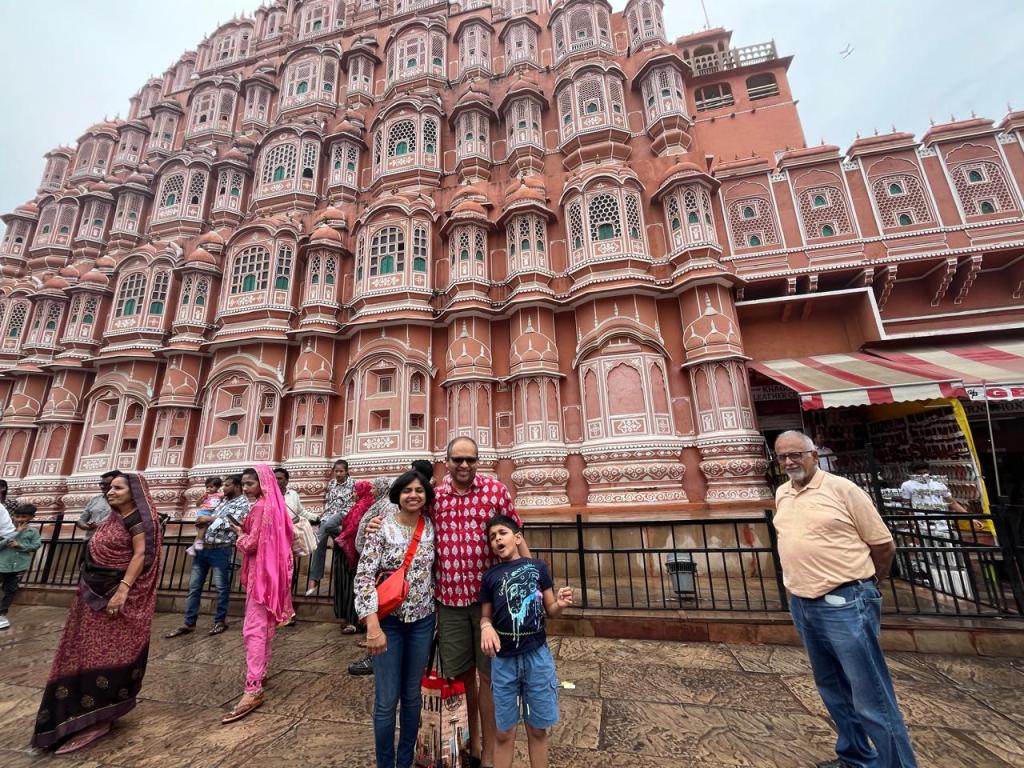
Majestic City Palace
Constructed by Maharaja Sawai Jai Singh II, the City Palace showcases a blend of Mughal and Rajput architecture. We visited Mubarak Mahal, Chandra Mahal, Diwan-i-Khas, and the well-maintained City Palace Museum, which houses royal costumes, weapons, manuscripts, and art. The art gallery displays miniature paintings, carpets, and other artifacts.
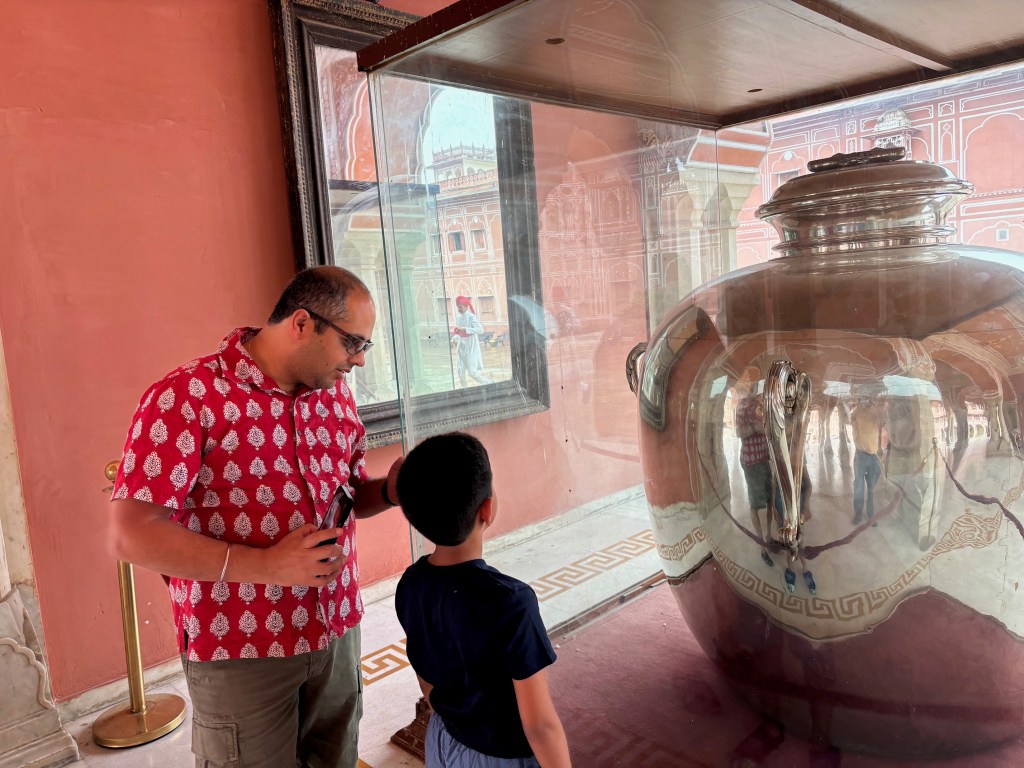
What intrigued me most were two large vessels used by Maharaja Sawai Madho Singh II for Ganga water, reflecting his strict adherence to religious and cultural practices.
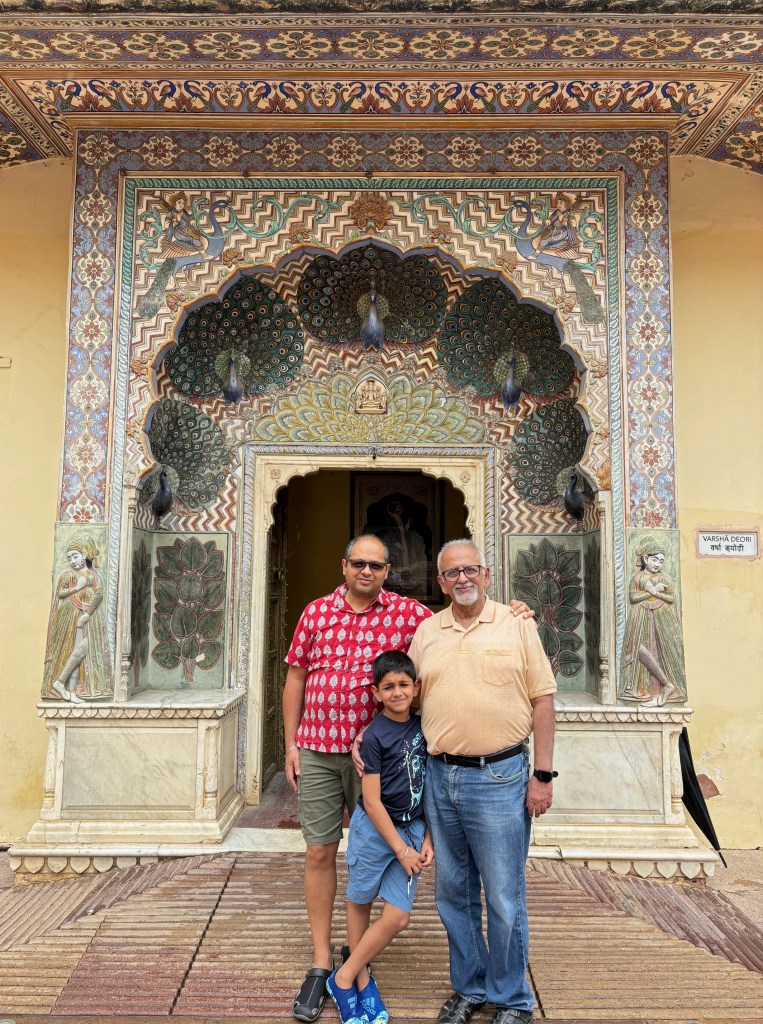
Another fascinating aspect was the four doors of the dancing hall:
- Peacock Gate: Representing autumn and dedicated to Lord Vishnu, featuring peacock motifs and rich green hues.
- Lotus Gate: Symbolizing summer and dedicated to Lord Shiva and Goddess Parvati, adorned with lotus motifs and vibrant pink colors.
- Green Gate (Leheriya Gate): Representing spring and dedicated to Lord Ganesha, with waves of green patterns.
- Rose Gate: Symbolizing winter and dedicated to Goddess Devi, decorated with intricate floral patterns and rose motifs.
Jantar Mantar
We covered the astronomical marvel Jantar Mantar in a separate blog post. This monument stands apart for showcasing India’s advanced knowledge and scientific achievements since ancient times.
Jal Mahal
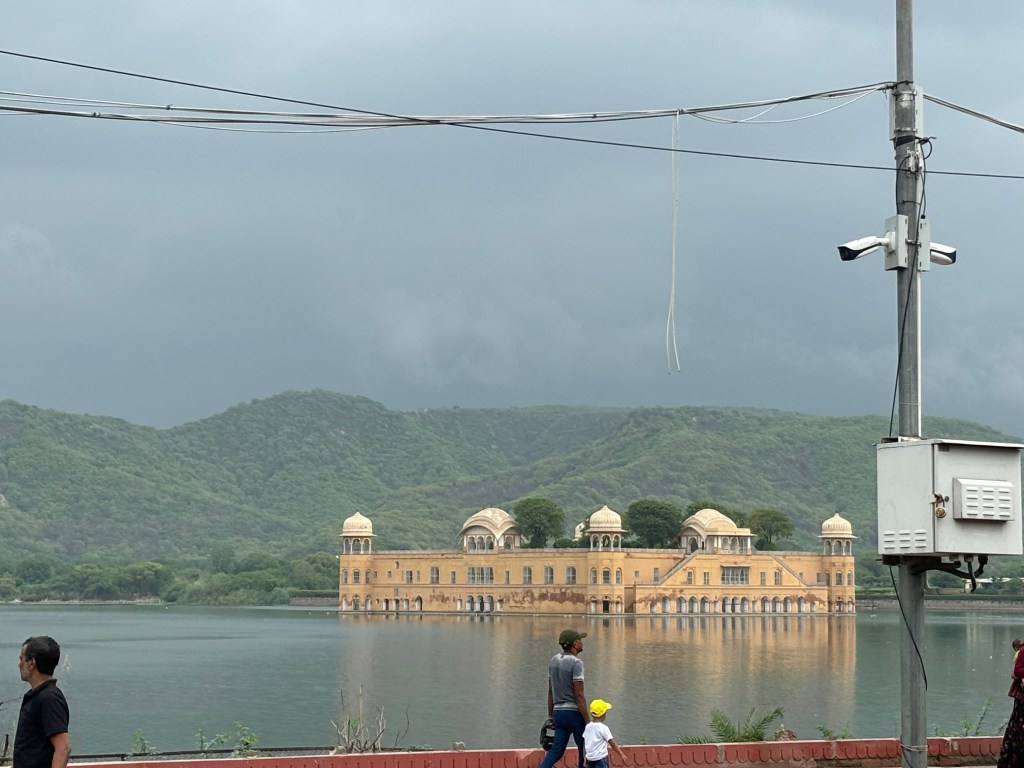
Jal Mahal, or the “Water Palace,” is a stunning architectural marvel located in the middle of Man Sagar Lake. Built in the 18th century by Maharaja Madho Singh I, this five-story palace features intricate sandstone carvings, picturesque balconies, and charming chhatris on its rooftop. We decided to admire its beauty from the outside and save the boat rides for another time.
Amber Palace: A Royal Fort
Amber Fort’s origins trace back to Raja Kakil Dev (Kachwaha), who shifted the capital from Dausa to Amber in 1037 AD. Every ruler contributed to its magnificence, with Raja Man Singh I credited for much of its stunning blend of Hindu and Mughal architecture. We visited Sheesh Mahal (Mirror Palace), Diwan-i-Aam, and Sukh Niwas. The lush garden in the fort’s courtyard contrasts beautifully with the historic walls, highlighting Amber Fort’s blend of natural beauty and man-made artistry.
Going through the palace, we visited the Sheesh Mahal (Mirror Palace), Diwan-i-Aam, and Sukh Niwas. It is a large fort with contributions by thirty generations and you could easily be walking 8-9000 steps to have a glimpse of it. A history enthusiast could however easily spend the entire day. But the facilities are generally well maintained like the beautiful garden in the court yard of the fort. The contrast between the lush greenery of the garden and the historic, weathered walls of the fort highlights the blend of natural beauty and man-made artistry that defines Amber Fort.
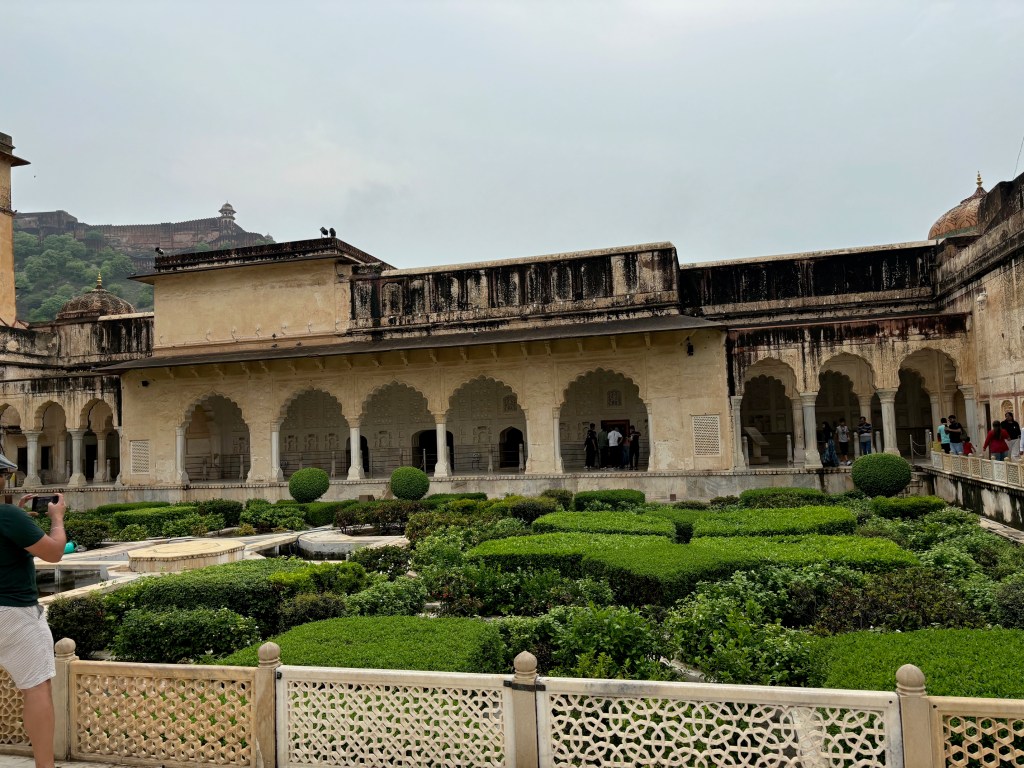
Amber Fort: The sheesh Mahal
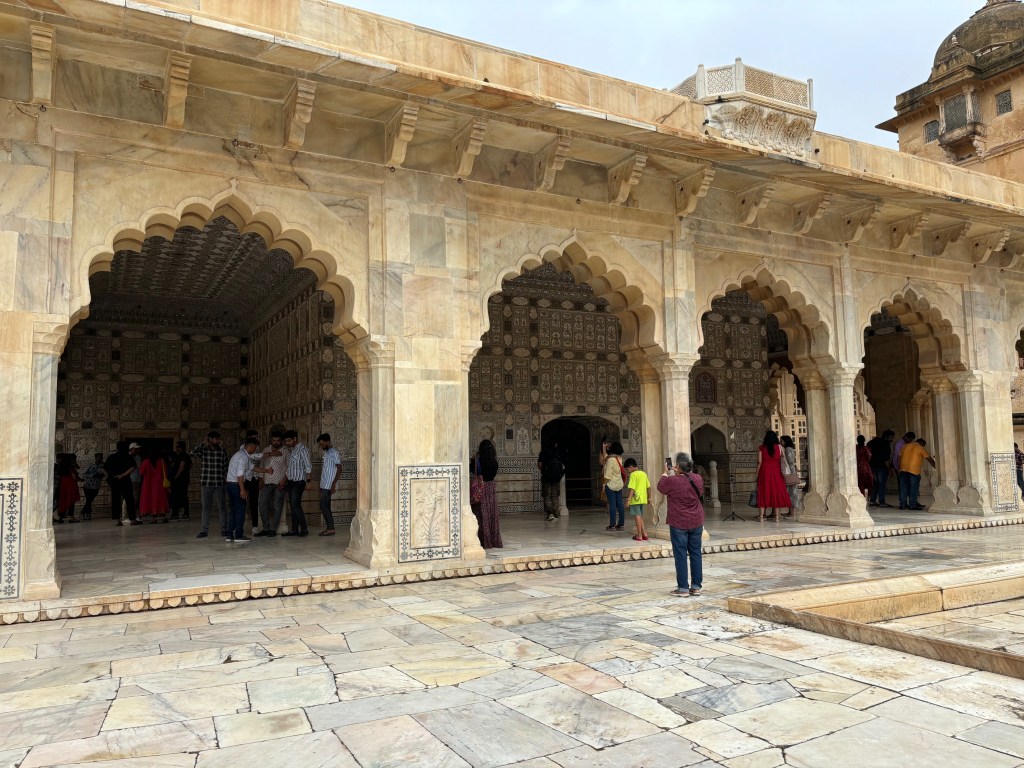
One could write a whole book on the Amber Palace but in this blog, I thought of covering a glimpse of the Sheesh Mahal. It is renowned for its intricate mirror work and detailed decorations. The structure in the picture features a series of large, arched doorways supported by columns, leading into a hall adorned with elaborate mirror mosaics and inlaid panels. The elegance of this structure is enhanced by exterior walls of polished marble and finely carved arches that present a poetry of craftsmanship of Rajput architecture. Inside is decorated by the intricate patterns created with mirrors and coloured glass, which are designed to reflect light and create a dazzling effect.
We skipped the Museum at Amber fort because we had seen similar things while in Jaipur.
Anokhi Museum of Hand Printing: Located nearby the Amber Fort, this museum is dedicated to preserving the traditional art of hand block printing. Visitors can learn about the techniques, history, and cultural significance of this craft, and even participate in workshops. At the time of our visit, the Museum was closed, yet we got an engaging demonstration of block printing on a scarf with the skilful hands of an experienced craftsman Saleem Bhai. We also got an excellent exposition to how the blocks are created from wood. It was intriguing to see how the craftsman had trained his hands to effortlessly exert the same pressure on the wooden piece with every hit on his tool to get the same depth of the pattern everywhere.
Below is the riot of colours with block printing created by Saleem Bhai in a matter of about five minutes. Now I understand why my wife, daughter and daughter-in-law love the stuff from Anokhi. Fab India, Dastkar, Gulab Bhawan and the likes. I think, the difference is in quality control and the skills of craftsmen.
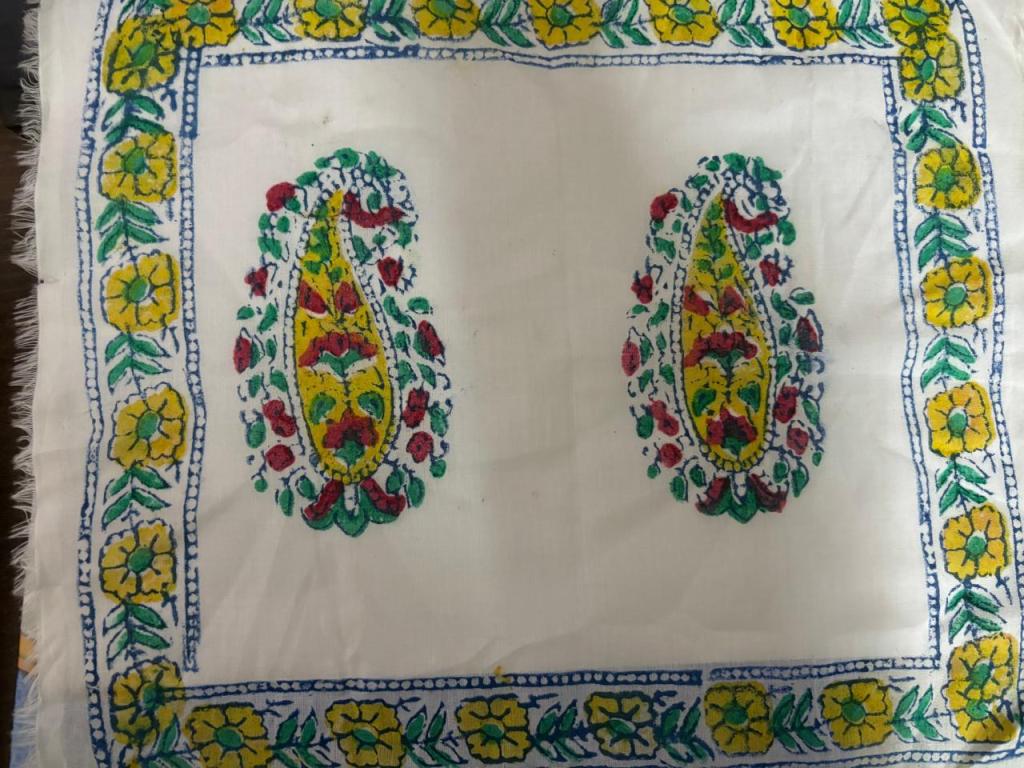
Elle Village Elephant Ride
Like most children, my grandson too liked to experience the elephant ride. As we were visiting in the offseason, we had an advantage of no waiting time and the rain god had been merciful not to impede the ride. We were told at the facility that the owner owned some 30 elephants-27 females and three males and were earlier associated with the former rulers and their families. The female elephants are considered less aggressive and friendly compared to the males who could be difficult to control.
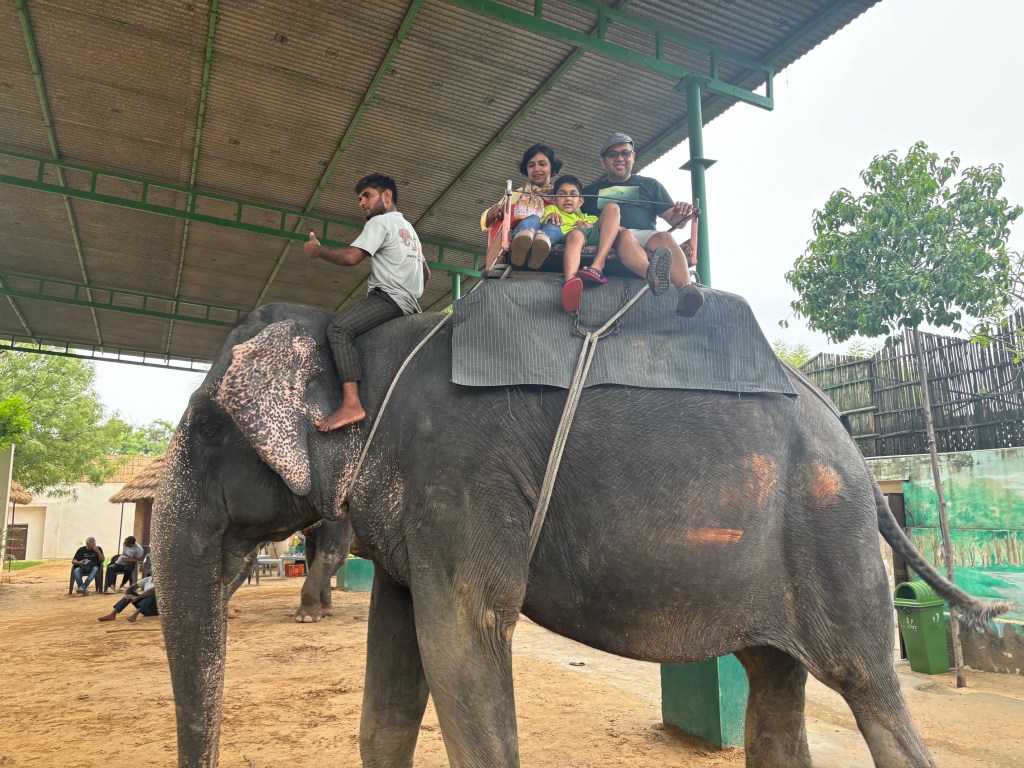
The majestic elephant ride on the majestic cow elephants surely is a thrilling experience but, as experienced by my family, during the monsoon season, the route they took for the ride was unclean with heaps of garbage and elephant faeces. Yet they were all praise for thew exceptional negotiating skills of the mahout who took them through the narrow lanes with children playing and parked two wheelers without causing any harm. This once again brings to the fore the ongoing ethical debate and concerns about the animal welfare. I wouldn’t say that these should be stopped because the elephants anyways require 25-30 Kms of walking to remain healthy. But the upkeep of the animals should be overseen more strictly.
Enchanting Light and Sound Show at Amber Palace
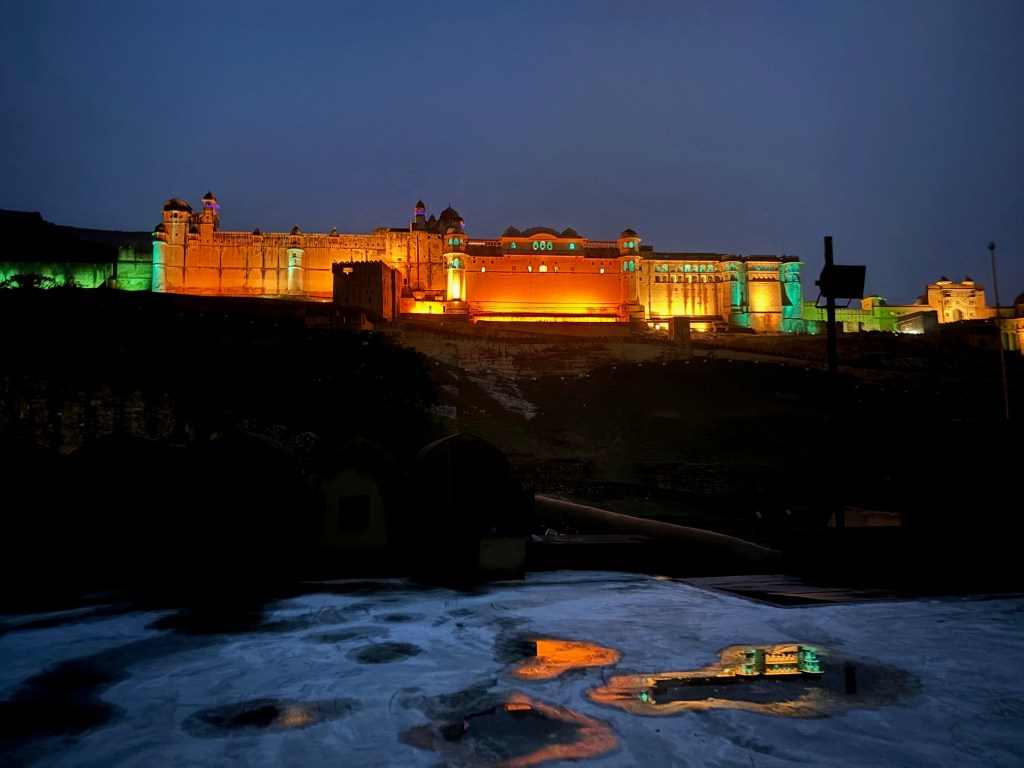
Sometime ago, I had written a blog on the invincible Kumbhalgarh fort which also covered the enchanting light and show at it. It is not right to compare the creative genius because I believe all creators do their best but I liked the show at Kumbhalgarh a shade better. Yet the show at Amber, Jaipur was also a good show encompassing the tale of 30 generations, the shift to Jaipur, abandoning of Amber fort for nearly 25 years following the construction of Jaipur, construction of neighbouring Nahargarh fort first as a retreat and then as a fort with a strategic advantage to counter ruthless Marathas. The show also brought out an interesting account of the diplomatic role that Maharaja Sawai Jai Singh II , particularly, his attempt to improve the Mughal-Maratha relations, particularly Shivaji. In 1666, Shivaji, was invited to Agra by the Mughal Emperor Aurangzeb. This invitation was part of Aurangzeb’s strategy to negotiate with Shivaji and bring him under Mughal authority. However, the situation took a turn when Shivaji felt insulted by the treatment he received at the Mughal court and decided to leave the Mughal Empire. Maharaja Jai Singh-I played a crucial role in facilitating Shivaji’s escape from Agra. Jai Singh I, a prominent general in the Mughal army, was initially responsible for negotiating Shivaji’s visit to the Mughal court. When Shivaji found himself under house arrest in Agra, Jai Singh I’s diplomatic skills and indirect support were instrumental in enabling Shivaji to devise a plan for escape. Thus, Historical events were well covered in the show, but my personal opinion is that there was some room for improvement in the narration and presentation front.
Practical Tips
- If travelling by car from Delhi, prefer to travel by the new Expressway to get an enchanting experience of the Aravalli ranges that will rejuvenate you.
- Stay two days in the Jaipur City and one day near to the location of Amber Fort.
- Timing of Jantar Mantar is 9:30 AM to 4:30 PM. It is advantageous to hire a guide.
- The following schedules should be noted:
City Palace Museum:
Closed: Dhulandi and Election (full day) & Gangore and Teej (half day)
Timings: 9:30 AM to 5:00 PM
Special Attractions: Pothikhana, Sileh khana, textile and costume gallery.
Hawa Mahal Museum:
Closed: Fridays and Public Holidays
Timings: 10:00 AM to 4:30 PM
Special Attractions: Rajput weaponry, armor, and sculptures from various parts of Rajasthan.
Anokhi Museum of Hand Printing:
Closed: Mondays and Public Holidays
Timings: 10:30 AM to 5:00 PM (Tuesday to Saturday); 11:00 AM to 4:30 PM (Sundays)
Special Attractions: Exhibits on the art and heritage of hand block printing.
Albert Hall Museum:
Closed: Open every day
Timings: 9:00 AM to 5:00 PM & 7:00 PM to 10:00 PM
Special Attractions: Rich collection of artifacts, paintings, and armoury.
Dolls Museum:
Closed: Public Holidays
Timings: 10:00 AM to 5:00 PM
Special Attractions: Dolls from various cultures dressed in traditional attires.
Gyan Museum:
Closed: Sundays
Timings: 11:00 AM to 6:30 PM
Special Attractions: Contemporary paintings, statues, jewelry, textiles, coins, and antiques.
Conclusion
Jaipur is a city that beautifully encapsulates the grandeur of Rajasthan’s royal heritage. From the architectural marvels of Hawa Mahal and Amber Palace to the scientific ingenuity of Jantar Mantar, there’s something for everyone. Whether you’re staying at the luxurious ITC Rajputana Hotel or exploring the city’s iconic gates, Jaipur promises an enriching and unforgettable experience. Don’t miss the enchanting light and sound show at Amber Palace and the serene elephant rides at Elle Village for a truly memorable visit.
 Inspire Positivity